
How to Start Exporting from Turkey to Tanzania: A Practical Guide
A practical guide to exporting from Turkey to Tanzania: the products, documents, shipping and costs behind a first order, and who decides what at...
· 10 min read
Written by Burak Unal, Director of African Markets
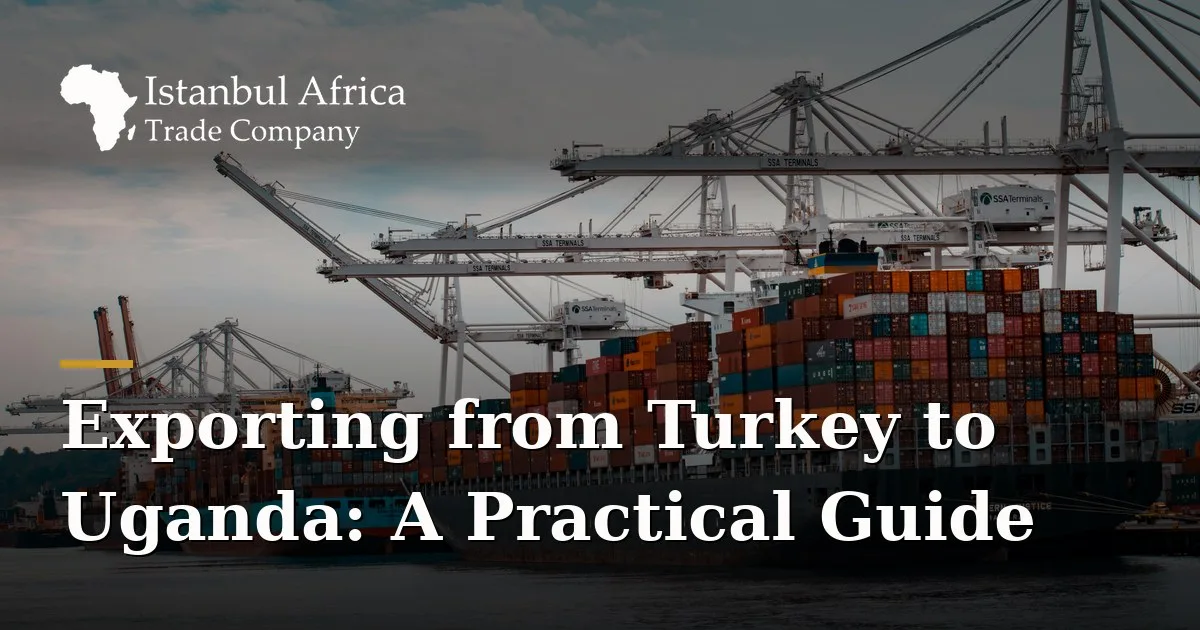
Exporting from Turkey to Uganda is a realistic step for a Turkish manufacturer or trader who prepares the paperwork properly, understands how goods reach a landlocked market, and knows which decisions belong to the authorities rather than to the seller. This guide walks through the documents, the shipping route, the regulations and the products that move, so you can plan a first shipment with your eyes open.
Uganda is a young, fast growing East African market of around 43 million people, with a GDP of about $25 billion as of 2017, the last year covered by our Africa Economic Report (published 2019). Those figures are dated, and you should confirm the current numbers before you commit, but they show the shape of the market: large in population, still building its industrial base, and importing much of what it consumes.
In our experience advising exporters, the two things that decide whether a first order to Uganda goes smoothly are the accuracy of the documents and a clear grasp of the transit corridor. Neither is complicated once you have seen it, and both are where a first time exporter tends to lose time.
Exporting from Turkey to Uganda involves preparing a commercial shipment in Turkey, moving it to an East African seaport, and clearing it inland to Uganda, with the buyer or their agent handling import clearance in Kampala. Because Uganda is landlocked, the goods do not arrive at a Ugandan port. They land at Mombasa in Kenya or Dar es Salaam in Tanzania and travel overland on the Northern or Central corridor.
Three parties share the work from there. The exporter produces clean, consistent paperwork, the carrier moves the cargo, and the Uganda Revenue Authority decides what is owed at the border. Knowing who does what before you quote a price keeps the surprises off a first invoice.
For a structured way through the whole process, our import and export consulting service covers classification, documentation and the steps from order to delivery. If you are weighing Uganda against its neighbours, the same logic in our guide to shipping a first order to Tanzania is worth reading, since the Central corridor through Dar es Salaam is one of Uganda's two main routes to the sea.
The core Turkey to Uganda export documents are the commercial invoice, the packing list, the bill of lading or air waybill, and a certificate of origin, with product specific certificates added on top. The exporter in Turkey prepares the commercial set, while the certificate of origin is issued through a Turkish chamber of commerce, not by us.
Ugandan authorities may also require a pre-export verification of conformity for many product categories, arranged before the goods leave Turkey. Getting the Turkey to Uganda export documents right the first time is the single most useful thing a new exporter can do, because a mismatch between the invoice, the packing list and the bill of lading is what holds cargo at the border.
A typical first shipment carries these documents:
Shipping goods to Uganda from Turkey almost always means sea freight to Mombasa or Dar es Salaam followed by road or rail transport inland to Kampala. Air freight is used for small, urgent or high value consignments, but the volume moves by sea because it is far cheaper per tonne.
From a Turkish port, a container travels to the East African coast, is cleared for transit, and then runs overland across Kenya or Tanzania into Uganda. Shipping goods to Uganda therefore takes longer and involves more parties than a shipment to a coastal country, so your quoted transit time should include the inland leg, not only the sea crossing.
We do not move the cargo or book the vessel, a freight forwarder does that. What we do is help you read the quotes, understand the trade terms, and plan the timeline so the documents are ready when the goods are. Deciding who is responsible for the inland leg, the exporter or the buyer, is a detail worth settling in writing before anything ships.
Uganda import regulations require that many products meet Ugandan standards and pass a pre-export verification of conformity before they arrive, with duties and taxes assessed by the Uganda Revenue Authority on entry. Uganda applies the East African Community common external tariff, so the duty rate depends on how the product is classified.
The importer in Uganda, or their licensed clearing agent, files the import declaration and pays what is due, while the exporter supplies documents that support the declared classification and value. Uganda import regulations change, and certification requirements differ by product, so the safe move is to confirm the current rules for your specific goods with the authority or a licensed agent before you ship.
We can help you research which requirements apply to your product and prepare for them, through our sector and product investigation service and the country background on our Uganda country profile. What we cannot do, and what no consultant should claim to do, is issue a certificate or promise that goods will clear. That decision belongs to the Ugandan authorities.
On the Turkey Uganda trade route, the goods Turkey actually exports have been led by milled foods, machinery and building inputs rather than finished consumer goods. According to our Africa Economic Report (published 2019, figures as of 2017), Turkey's exports to Uganda were worth about $31 million in 2017, down from around $46 million in 2008.
The top ten products made up 41.8 percent of that total in 2017, a broader spread than the 86.1 percent the top ten held in 2008, which tells you the trade has diversified. The table below shows the leading products by share of Turkish exports to Uganda in 2017.
| Product | Share of Turkey's exports to Uganda, 2017 |
|---|---|
| Wheat flours | 9.3% |
| Pasta | 6.0% |
| Stone processing machines | 4.0% |
| Yeast | 3.6% |
| Insulated wire | 3.6% |
| Plastic pipes | 3.5% |
| Utility meters | 3.4% |
Those 2017 figures are old and describe direction, not today's demand, so treat them as a starting point and check current appetite before you commit. If you are choosing what to sell or where to focus, our trade strategy development service helps identify opportunities on the Turkey Uganda trade route, and the wider food and beverage sector pages give useful context for the milled and processed foods that already move.
You reduce risk when exporting from Turkey to Uganda by verifying your buyer, agreeing clear trade terms, and confirming every requirement before the goods leave Turkey rather than after. Three habits carry most of that:
In our experience the classification code is where most first time exporters lose a week, so it is worth settling before you print a single document.
If you would rather not learn all of this on your first order, that is what an adviser is for, and you can contact our team to talk through your specific goods and route.
Exporting from Turkey to Uganda rewards preparation. Get the documents consistent, understand that the goods reach a landlocked market through Mombasa or Dar es Salaam, confirm the current regulations for your product, and treat the 2017 trade figures as direction rather than fact. Do that, and a first shipment on the Turkey Uganda trade route becomes a process you can repeat rather than a gamble.
Istanbul Africa Trade Company is a trade consultancy based in Istanbul that has helped businesses in Turkey and across Africa find suppliers, verify partners and build trade routes since 2016. We advise on import and export consulting, sector and product investigation, contract manufacturing, and trade strategy development. To talk through your own plans, call or message us on WhatsApp at +90 532 669 30 50, email contact@istanbulafrica.com, or visit us at Merkez Mahallesi Hasat Sokak No:12a, 34384 Şişli/İstanbul. Contact us for guidance on your next shipment or sourcing decision.
Yes, Uganda is landlocked, so goods from Turkey arrive at a seaport in Kenya or Tanzania and travel overland to Kampala. This adds an inland leg and extra handling compared with a coastal market, which is why your transit time and cost should always include the road or rail journey inside East Africa.
The importer in Uganda, or their licensed clearing agent, pays the import duties and taxes assessed by the Uganda Revenue Authority. The exporter in Turkey supplies the documents that support the declared classification and value, but the payment and the declaration are the importer's responsibility.
In most cases yes, a certificate of origin issued by a Turkish chamber of commerce accompanies the shipment. Many product categories also require a pre-export verification of conformity arranged before the goods leave Turkey, so confirm the exact requirements for your product before you ship.
It varies with the sea route, the port and the inland leg, so ask your freight forwarder for a door to door estimate rather than a port to port one. The overland journey from Mombasa or Dar es Salaam to Kampala is a real part of the timeline and is easy to overlook.
No, we are a trade consultancy and do not clear goods, move cargo or issue any certificate. We advise on classification, documentation and market entry, while the clearance itself is handled by a licensed agent and the Uganda Revenue Authority makes the final decision.
Istanbul Africa Trade Company is a trade consultancy based in Sisli, Istanbul, founded in 2016. We work with importers, exporters, manufacturers and distributors in Turkey and across 20 African markets, with market leaders on the ground in Ghana, Uganda and Zimbabwe. Our services cover import and export consulting, sector and product investigation, contract manufacturing, and trade strategy development. You can browse our African country profiles and sector guides on our site, or reach our advisors at contact@istanbulafrica.com and +90 532 669 30 50.
Istanbul Africa Trade Company provides trade consulting services only. We are not a freight forwarder, a customs broker, a shipping line, a bank, a law firm, a government agency or a certification body. We do not move cargo, clear goods, finance trade, or issue permits, licences or certificates. Tariff, customs, certification and regulatory decisions belong to the authorities of the countries involved. This article is general information, current as of the time it was written. Rules, tariffs and costs change, so confirm the details for your own case with the relevant authority or with our advisors before you act on them.
A practical guide to exporting from Turkey to Tanzania: the products, documents, shipping and costs behind a first order, and who decides what at...
A practical guide to exporting from Turkey to Ethiopia: the documents, the Djibouti corridor, Ethiopian import rules, and who decides what at each...
Exporting from Turkey to Morocco, step by step: the documents you prepare, how goods move by sea, who decides customs and tariffs, and how to verify...