Turkish Chemical Exports to Africa: A Practical Guide
A practical guide to Turkish chemical exports to Africa: the products that sell, the documents and registration a shipment needs, and the markets...
· 10 min read
Written by Burak Unal, Director of African Markets
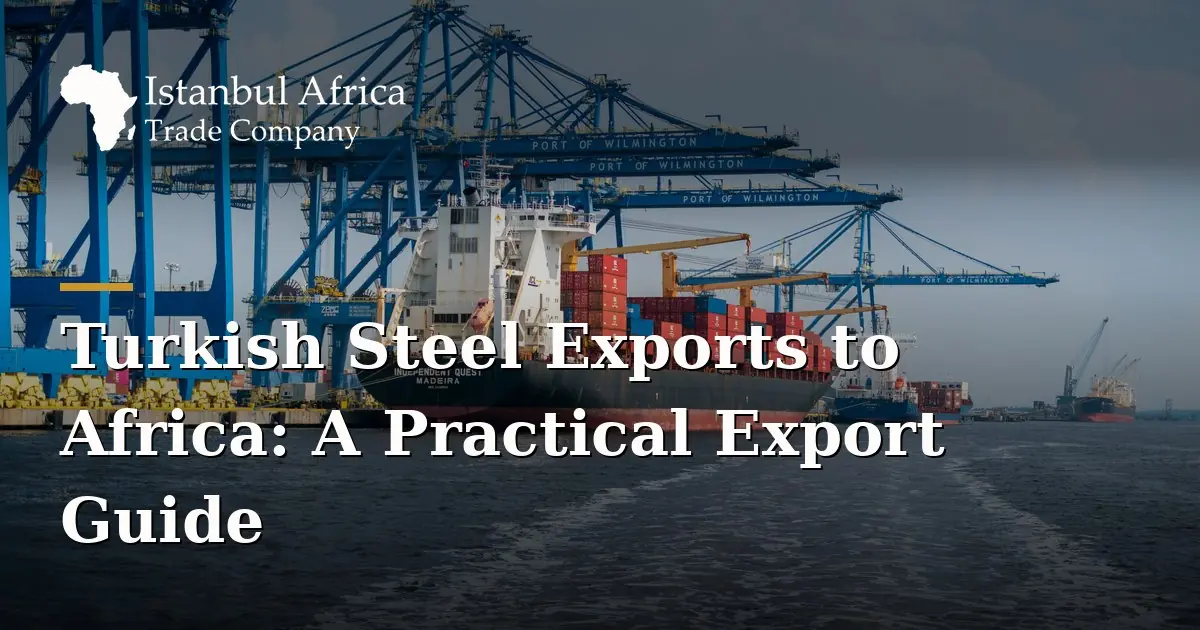
Turkish steel exports to Africa cover far more than the beams and rebar most people picture. They run from raw iron bars and hot-rolled coil to prefabricated iron structures, gas containers, insulated wire and aluminium housewares, and each of those sells into a different project with its own paperwork.
This guide walks a Turkish producer or trader through how that trade actually works: which markets buy what, the documents a shipment needs, how the price a buyer sees is built up, and how a buyer checks that you are real before wiring a deposit.
The aim is practical rather than theoretical. By the end you should know where demand sits, what a steel export file contains, what shapes the landed cost, and where first time exporters most often lose a week. We advise on this route regularly, and the same handful of mistakes repeat, so we have put each one next to the step where it tends to happen.
Turkish steel exports to Africa work because Turkey sits close to the continent and rolls a broad range of long and flat steel products that African construction and light manufacturing need. A container of rebar leaving Iskenderun reaches a West African port in a matter of weeks, not months, and the same mills that supply the domestic market can fill an export order without retooling.
Iron and steel items appear in the top ten products Turkey sells to market after market. As of 2017, the last year covered by our Africa Economic Report, which was published in 2019, raw iron bars alone made up about 24 percent of Turkey's exports to Ethiopia, and semi-finished iron about 15 percent of its exports to Tunisia.
The range matters as much as the volume. A buyer in Dakar ordering reinforcing bar, a contractor in Algiers wanting prefabricated iron structures and a workshop in Kampala buying insulated wire are all part of the same trade, and a supplier who understands the whole catalogue can serve more of it.
Steel also travels well alongside related goods, so it is worth reading this next to our guide on selling Turkish machinery into African markets, since many of the same contractors buy both. When the fit is right we help structure the first orders through our import and export consulting service.
Several North, West and East African markets buy Turkish steel and metal products in volume, and each has a different mix. The table below shows the single most prominent iron or steel line in Turkey's exports to a few of those markets, with its share of that country's total imports from Turkey. Every figure is a 2017 number from our Africa Economic Report, published in 2019, so treat it as direction rather than this year's price.
| Market | Leading Turkish metal line (2017) | Share of exports from Turkey |
|---|---|---|
| Ethiopia | Raw iron bars | 24.0 percent |
| Tunisia | Semi-finished iron | 15.0 percent |
| Zimbabwe | Iron structures | 8.8 percent |
| Algeria | Iron structures | 6.8 percent |
| Senegal | Hot-rolled iron bars | 6.3 percent |
| Nigeria | Iron structures | 5.0 percent |
Read the table as a map of where to look first, not as a ranking of total demand. Ethiopia's high raw iron bar share reflects a building boom drawing in semi-processed steel, while a diversified market like Egypt spreads its purchases of Turkish steel and metal products across bars, blocks and aluminium housewares.
Choosing a target market well is a research job, not a guess, which is why we start most engagements with sector and product investigation and, for a broader view of the continent, our overview of market research for Turkish exporters. The wider picture for the sector sits on our metal production in Africa page.
A typical steel shipment travels with a commercial invoice, a packing list, a bill of lading, a certificate of origin and a mill test certificate, plus whatever inspection or conformity document the destination country requires.
The exporter prepares the invoice and packing list; the carrier issues the bill of lading; a chamber of commerce certifies the origin; and the mill, not the trader, issues the mill test certificate that ties each batch to its heat number and chemical analysis. We prepare and check these steel export documents with clients, but we do not issue any of them, and the destination's authorities decide what they will accept.
The mill test certificate is where steel differs from most other goods. A buyer financing a structural project needs proof that the bar meets the grade on the contract, and that proof is the mill test certificate keyed to the specific heat of steel delivered.
In our experience the classification code and the grade description are where most first time exporters lose a week, because an invoice that says "iron bars" when the buyer's letter of credit says a named grade will stall at the bank. Matching those steel export documents to the contract wording before anything ships saves that week.
Steel buyers in Africa verify a Turkish supplier by checking company registration, asking for mill test certificates tied to specific heat numbers, requesting trade references and, on a large order, commissioning an independent pre-shipment inspection. None of this is unusual or a sign of distrust; it is how a careful buyer protects a deposit when the goods are a continent away. A supplier who offers these checks before being asked moves faster than one who treats them as an obstacle.
The pre-shipment inspection is the step worth understanding. Many African markets require, or their banks require, that an accredited agency inspect and sometimes test the steel before it leaves Turkey, and the inspection certificate then becomes part of the shipping file. We help both sides line this up, but the inspection body is independent of us and its finding is its own. For steel buyers in Africa, insisting on that inspection on a first order with a new supplier is simply prudent, and we often advise it.
The landed cost in Turkey Africa steel trade is built from the mill price per tonne, inland haulage to the port, sea freight, insurance, destination port charges, import duty and any inspection or conformity fees.
Steel is heavy and low value by volume, so freight and port charges weigh more heavily on the final price than they would for lighter cargo, and a small change in the freight rate can move the delivered price per tonne noticeably. We do not move cargo or finance any of these costs; we help a client see the full build-up before they commit to a price.
Duty is the line exporters most often misjudge. The rate depends on the product's classification and the destination country's own tariff schedule, and only that country's customs authority can set and apply it.
A figure that looks fixed can change with a budget or a trade measure, so treat any duty rate as current only at the time of writing and confirm it for your own case. Getting the classification right at the quoting stage, rather than at the border, keeps a Turkey Africa steel trade quote honest and keeps the buyer's final cost close to the one you quoted.
You reduce risk in steel export documents by matching every figure across the invoice, packing list and certificate of origin before the goods move, and by confirming the destination's conformity requirement in writing before production starts.
A mismatch of a few kilograms between the packing list and the bill of lading, or a grade named one way on the invoice and another on the certificate, is enough to hold a container while a correction travels back and forth. In our experience the cheapest fix is a single cross-check of the whole file against the contract the day before loading.
The second habit is to confirm the conformity rule early. Many markets operate a conformity assessment programme that must be satisfied before shipment, not after arrival, and discovering it late means either an expensive rush inspection or a container sitting at the destination. Ask, in writing, what the buyer's market requires before you cut steel, and build the answer into the plan. None of this guarantees a smooth border crossing, because the authorities decide, but it removes the self-inflicted delays.
Turkish steel exports to Africa reward producers who treat the paperwork and the grade documentation as part of the product rather than an afterthought. Pick the market with research, quote the full landed cost honestly, document the grade properly, and give a cautious first time buyer the checks they need, and the second order tends to be easier than the first. If you want a second pair of eyes on a specific route or a specific grade, that is the kind of question we answer every week.
Istanbul Africa Trade Company is a trade consultancy based in Istanbul that has helped businesses in Turkey and across Africa find suppliers, verify partners and build trade routes since 2018. We advise on import and export consulting, sector and product investigation, contract manufacturing, and trade strategy development. To talk through your own plans, call or message us on WhatsApp at +90 532 669 30 50, email contact@istanbulafrica.com, or visit us at Merkez Mahallesi Hasat Sokak No:12a, 34384 Şişli/İstanbul. Contact us for guidance on your next shipment or sourcing decision.
No, Turkish steel exports to Africa run well beyond construction steel. Alongside rebar and hot-rolled bars, Turkey sells prefabricated iron structures, iron blocks, insulated and copper wire, iron gas containers and aluminium housewares, so the trade reaches contractors, workshops and distributors, not only building sites.
No, we do not issue any certificate. A chamber of commerce certifies origin and the producing mill issues the mill test certificate; we are a trade consultancy that helps prepare and check the file, and the destination's authorities decide what they accept.
Our dataset reports product shares rather than a single ranking of total steel demand, so the honest answer is that it depends on the product. As of 2017, iron and steel lines were a large part of Turkey's exports to Ethiopia, Tunisia, Algeria and Senegal among others, and choosing between them is a research question for your specific product.
No, no one can promise that, and you should be wary of anyone who does. Customs clearance is decided by the authority in the destination country; we help you assemble a correct, complete file that gives the shipment the best chance, but the decision is not ours or yours.
It varies with the product, the grade and the destination's inspection rules, so plan in weeks rather than days for a first order with a new buyer. Much of that time is paperwork and inspection rather than sailing, which is exactly why getting the documents right early is worth the effort.
Istanbul Africa Trade Company is a trade consultancy based in Sisli, Istanbul, founded in 2018. We work with importers, exporters, manufacturers and distributors in Turkey and across 20 African markets, with market leaders on the ground in Ghana, Uganda and Zimbabwe. Our services cover import and export consulting, sector and product investigation, contract manufacturing, and trade strategy development. You can browse our African country profiles and sector guides on our site, or reach our advisors at contact@istanbulafrica.com and +90 532 669 30 50.
Istanbul Africa Trade Company provides trade consulting services only. We are not a freight forwarder, a customs broker, a shipping line, a bank, a law firm, a government agency or a certification body. We do not move cargo, clear goods, finance trade, or issue permits, licences or certificates. Tariff, customs, certification and regulatory decisions belong to the authorities of the countries involved. This article is general information, current as of the time it was written. Rules, tariffs and costs change, so confirm the details for your own case with the relevant authority or with our advisors before you act on them.
A practical guide to Turkish chemical exports to Africa: the products that sell, the documents and registration a shipment needs, and the markets...
A buyer's guide to Turkish machinery exports to Africa: what African manufacturers buy, which markets lead, the documents a shipment needs, and how...
A practical guide to Turkish furniture exports to Africa: who buys it, the documents a first shipment needs, how to ship it safely, and what it costs...