How to Start Exporting from Turkey to Senegal: A Practical Guide
A practical guide to exporting from Turkey to Senegal: the documents, costs, shipping steps and import rules for a first order, and who decides what...
· 9 min read
Written by Burak Unal, Director of African Markets
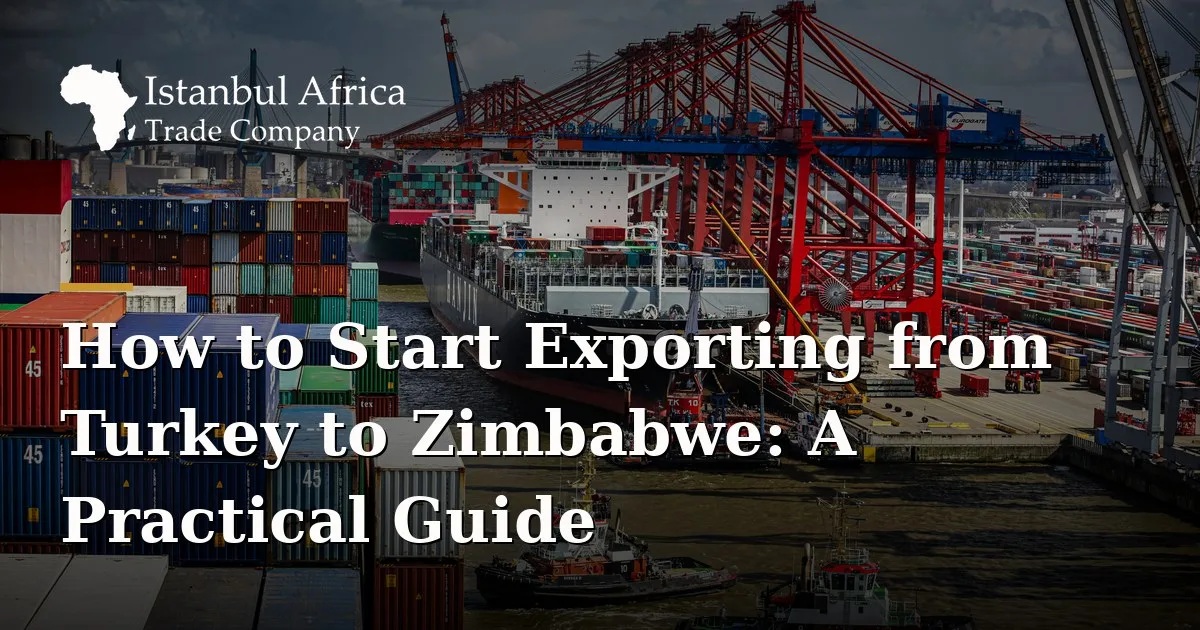
Exporting from Turkey to Zimbabwe is a landlocked trade problem before it is anything else: the goods leave a Turkish port by sea, land at a coast that belongs to another country, and finish the trip overland. By the end of this guide you will know the documents a first shipment needs, how the route actually works, which Turkish products already sell into Zimbabwe, and how to find and check a buyer before you ship.
Istanbul Africa Trade Company has advised on the Turkey to Africa corridor since 2016, and we keep a market leader on the ground in Zimbabwe. In our experience the two things that trip up a first time exporter are the paperwork sequence and the assumption that a landlocked market ships like a coastal one. Neither is hard once you see the whole picture, and this guide lays it out in the order the work happens.
Start by settling three questions before you quote a price: whether your product may legally enter Zimbabwe, whether you have a real buyer, and which party pays for each leg of the journey. Exporting from Turkey to Zimbabwe rewards this preparation, because the route crosses an extra border and every handoff is a point where a shipment can stall.
The practical first step is to fix your product's HS classification code and agree an Incoterms rule with the buyer, so both sides know where your responsibility ends and theirs begins. Our import and export consulting work usually begins here, because a wrong code or a vague delivery term is the mistake that surfaces later as a delayed container and an unexpected bill.
You need a commercial invoice, a packing list, a bill of lading, a certificate of origin, and any product specific certificates your buyer's category requires. The export documents for Zimbabwe are produced in a set order, and each one depends on the one before it, so a mistake early forces a reissue of everything downstream.
The certificate of origin is issued by a Turkish chamber of commerce, not by us: we advise on which documents a shipment needs and how they fit together, but the authorities and chambers issue them. Zimbabwe operates an import licensing regime for some product categories, so confirm with the buyer whether their goods need a licence before the container moves. In our experience the classification code is where most first time exporters lose a week, because the code drives the duty rate, the licence question and half the document set at once.
Keep a checklist of the export documents for Zimbabwe and match it against the buyer's requirements in writing. A document that is correct but missing a signature or a stamp is treated as missing, and it is cheaper to catch that in Istanbul than at a border post in southern Africa.
Goods reach Zimbabwe by sea to a port in a neighbouring country and then overland by road or rail, because Zimbabwe has no coastline of its own. Because of that, shipping goods to Zimbabwe almost always means an ocean leg to a regional port such as Durban in South Africa or Beira in Mozambique, followed by a cross border trucking or rail leg into Harare.
This two leg structure is the single biggest difference from a coastal market, and it changes your costs, your timeline and your paperwork. The transit country's customs and the Zimbabwean border both handle the goods, so shipping goods to Zimbabwe needs documents that satisfy the transit authority as well as the destination. If you have already looked at sending a first order to South Africa, you know the ocean leg; the overland leg beyond the port is what is new here.
We do not move the cargo or clear it at any border. A freight forwarder and a customs broker do that, and choosing competent ones for the transit route matters more on a landlocked lane than on a direct one.
Machinery, vehicles and processed foods lead the way, judging by what Turkey already sends. As of 2017, the last year covered by our Africa Economic Report published in 2019, Turkey's exports to Zimbabwe were worth about USD 5.3 million, and a few product categories made up most of that total.
| Product category | Share of Turkey's 2017 exports to Zimbabwe |
|---|---|
| Mill machinery | 17.9 percent |
| Tractors | 9.4 percent |
| Iron structures | 8.8 percent |
Those shares are 2017 figures from our 2019 Africa Economic Report and the market has moved since, so treat them as direction, not as a current quote.
Zimbabwe's own economy points to where demand sits. As of 2017, again from our 2019 Africa Economic Report, its top import products were broadcasting equipment, medicaments and trucks, and its main import partners were South Africa, China and India. A Turkish exporter competes against those established suppliers, so a clear quality and price story matters. To test a specific product properly, our sector and product investigation service researches real demand and pricing before you commit stock.
The work of finding buyers in Zimbabwe starts with the sector, not with a name: decide exactly what you sell, then look for the distributors, wholesalers and manufacturers who already move that category. Trade fairs, sector associations and a local presence surface real counterparties far more reliably than an unsolicited inbox ever will.
Verification is the half that gets skipped and should not be. Before you ship on any terms softer than payment in advance, confirm the buyer is a registered business, that the people you deal with can bind it, and that its bank details match its legal name. All that effort of finding buyers in Zimbabwe is only useful if the buyer is real, which is why we keep a market leader on the ground there and check counterparties in person. You can read the country context on our Zimbabwe country profile before a first conversation.
Plan for two cost blocks and two time blocks, because the Turkey to Zimbabwe trade route has a sea leg and an overland leg, each with its own charges and delays. The ocean freight to a regional port, the port handling, the cross border trucking or rail, the transit and destination duties, and insurance all sit between your factory gate and the buyer's warehouse.
No honest guide quotes you a single all in figure, because freight rates, the fuel situation and border waiting times all move, and any number here would be out of date by the time you read it. What we can say is that the overland leg and the extra border are where the Turkey to Zimbabwe trade route usually adds both cost and time against a coastal market, so build slack into your first timeline. For a broader view of a nearby coastal lane, our guide to reaching the East African market through Tanzania shows how a direct sea route compares.
Exporting from Turkey to Zimbabwe comes down to four things done in order: the right documents, a realistic view of the landlocked route, a product the market actually wants, and a buyer you have checked. Get those right and the mechanics follow. If you want a second pair of eyes on any of them, you can talk to our advisers before your first container leaves Istanbul.
Istanbul Africa Trade Company is a trade consultancy based in Istanbul that has helped businesses in Turkey and across Africa find suppliers, verify partners and build trade routes since 2016. We advise on import and export consulting, sector and product investigation, contract manufacturing, and trade strategy development. To talk through your own plans, call or message us on WhatsApp at +90 532 669 30 50, email contact@istanbulafrica.com, or visit us at Merkez Mahallesi Hasat Sokak No:12a, 34384 Şişli/İstanbul. Contact us for guidance on your next shipment or sourcing decision.
Yes, Zimbabwe is landlocked, so goods arrive by sea at a regional port such as Durban or Beira and then travel overland into the country. That extra leg adds cost, time and a transit country's customs to your plan.
Some product categories require an import licence, which the buyer typically arranges on the Zimbabwean side. Confirm the licence question in writing before the container moves, because it depends on the exact product and can change.
A Turkish chamber of commerce issues the certificate of origin, not a consultancy. We advise on which documents your shipment needs and how they fit together, and the chamber and the authorities issue them.
There is no single fixed figure, because the sea leg, port handling and the overland border crossing all vary. Build extra slack into a first shipment and confirm current transit times with your freight forwarder.
No, we are a trade consultancy and do not clear goods, move cargo or issue documents. We advise on the process and connect the parts; customs clearance is handled by a licensed customs broker and the relevant authorities.
Istanbul Africa Trade Company is a trade consultancy based in Sisli, Istanbul, founded in 2016. We work with importers, exporters, manufacturers and distributors in Turkey and across 20 African markets, with market leaders on the ground in Ghana, Uganda and Zimbabwe. Our services cover import and export consulting, sector and product investigation, contract manufacturing, and trade strategy development. You can browse our African country profiles and sector guides on our site, or reach our advisors at contact@istanbulafrica.com and +90 532 669 30 50.
Istanbul Africa Trade Company provides trade consulting services only. We are not a freight forwarder, a customs broker, a shipping line, a bank, a law firm, a government agency or a certification body. We do not move cargo, clear goods, finance trade, or issue permits, licences or certificates. Tariff, customs, certification and regulatory decisions belong to the authorities of the countries involved. This article is general information, current as of the time it was written. Rules, tariffs and costs change, so confirm the details for your own case with the relevant authority or with our advisors before you act on them.
A practical guide to exporting from Turkey to Senegal: the documents, costs, shipping steps and import rules for a first order, and who decides what...
A practical guide to exporting from Turkey to Ivory Coast: the documents, customs steps and packing that get a first shipment through the port at...
A practical guide to exporting from Turkey to Uganda: the documents, the shipping route through Mombasa or Dar es Salaam, the regulations, and the...