How to Start Exporting from Turkey to Algeria: A Practical Guide
A practical guide to exporting from Turkey to Algeria: the documents, the import regulations, the Turkish products that sell there and how the trade...
· 9 min read
Written by Burak Unal, Director of African Markets
Exporting from Turkey to Cameroon is a manageable process once you understand who decides what, and in which order the paperwork is produced. By the end of this guide you will know the documents a first shipment needs, how goods usually travel from Turkey to Central Africa, which Turkish products already sell in the market, and how to check that a buyer is genuine before you load a container.
Cameroon is a bilingual country and one of the main gateways to the Central African region, so a supplier who learns the route here is often looking at the wider market behind it. According to our Africa Economic Report, published in 2019 with figures as of 2017, Turkey's exports to Cameroon reached about $97 million in 2017, up from around $32 million in 2008. That is a small corridor with room to grow, which is exactly the kind of market a first time exporter can enter without competing against dozens of established suppliers.
In our experience the first order is where most of the learning happens, and the exporters who plan the documents before they quote a price are the ones who avoid a shipment sitting at the port. This guide walks through that planning in plain steps, and our import and export consulting team advises on exactly this kind of first shipment.
Exporting from Turkey to Cameroon involves agreeing terms with a buyer, preparing an export declaration and commercial documents in Turkey, arranging transport, and meeting Cameroon's import requirements at the port of entry. You are responsible for the goods and the paperwork on the Turkish side; a freight forwarder moves the cargo and a licensed customs broker in Cameroon clears it. The authorities in each country decide tariffs, taxes and any inspection, not the exporter and not us.
The practical sequence rarely changes. You confirm the product, quantity and Incoterms with the buyer, classify the goods under the correct HS code, issue the commercial invoice and packing list, book the shipping, and produce the certificate of origin and any product certificates the buyer's authorities ask for. Getting the classification right early matters, because it drives the duty rate the importer pays and the documents Cameroon customs will expect.
The core export documents for Cameroon are a commercial invoice, a packing list, a transport document, and a certificate of origin. Most shipments also need a Cameroon import declaration filed by the buyer's broker and, depending on the goods, a certificate of conformity under the country's product inspection programme. You supply the accurate documents from the Turkish side; the importer's customs broker files the declaration in Cameroon.
In our experience the classification code is where most first time exporters lose a week, because a wrong HS code changes both the duty and the export documents for Cameroon that the importer's broker expects. Confirm the code and the current inspection requirement with the authorities or an adviser before you print anything final.
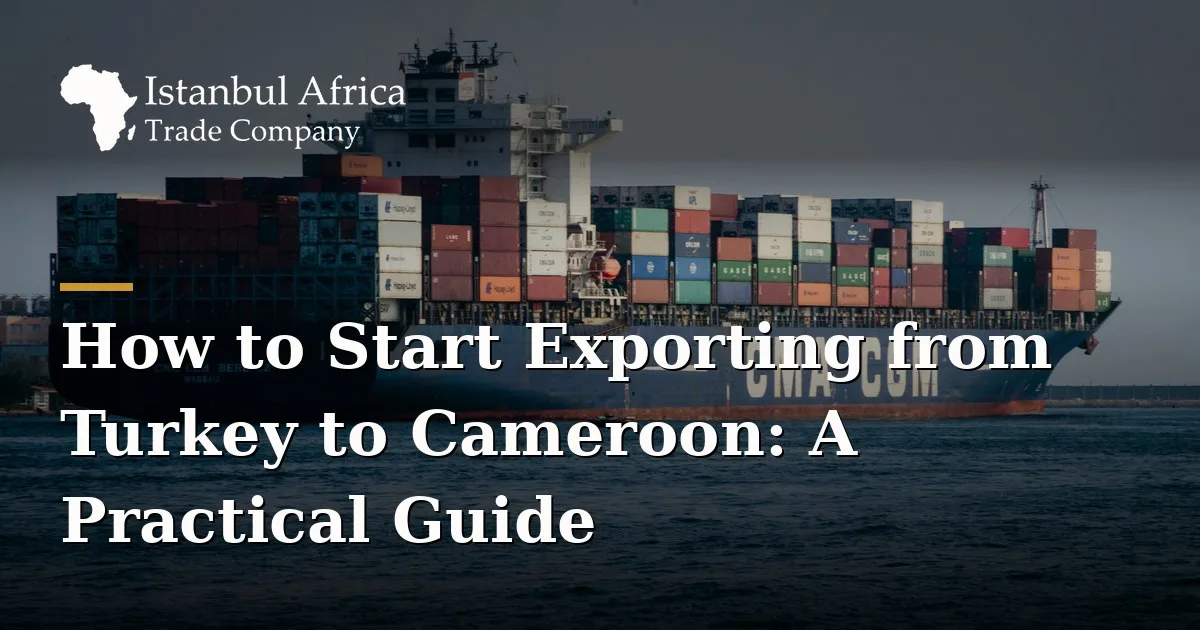
Shipping from Turkey to Cameroon is usually done by sea, with containers leaving Turkish ports such as Mersin or Istanbul and arriving at the Port of Douala, the country's main commercial gateway. Air freight through the airports at Douala and Yaounde suits small, urgent or high value consignments. You appoint a freight forwarder to arrange the route; we are a trade consultancy and do not move cargo or issue transport documents.
The Incoterms you agree decide where your responsibility ends and the buyer's begins, so settle them before you quote. A first time exporter is often better starting on terms that keep control of the goods until they are loaded, rather than promising delivery to an inland Cameroon city they have never shipped to. Transit times and freight rates move with the market, so confirm both at the time of writing rather than relying on a figure from last year. Douala handles heavy volume, and building a little schedule buffer into shipping from Turkey to Cameroon saves a lot of anxious phone calls.
The products that already move in the Turkey Cameroon trade are led by construction materials and processed foods. According to our Africa Economic Report, published in 2019 with figures as of 2017, cement was the single largest Turkish export to Cameroon that year at about 8.3 percent of the total, followed by iron blocks and hot-rolled iron bars. Insulated wire, pasta, buses and yeast also featured in the top ten.
That mix points you toward demand for construction and building materials and for finished consumer goods. The same report shows Cameroon's leading imports overall were refined petroleum, ships and rice, while its main exports were crude petroleum, cocoa beans and sawn wood, which tells you it is a market that buys processed and manufactured products rather than making them at home. If you are unsure whether your own product has a buyer there, that is a question our sector and product investigation work is built to answer.
Selling to Cameroon importers starts with finding the right distributor or wholesaler and then verifying that the company is real, solvent and licensed to import your product. A name and a tidy website are not verification. Confirm the company's registration, its trading history and its bank references before you agree terms, and structure the first payment so neither side carries all the risk.
You can meet buyers through trade fairs, sector directories and referrals, and the francophone connection means a route like exporting from Turkey to Senegal shares many of the same buyer-checking habits. When you are selling to Cameroon importers for the first time, we usually advise starting with a smaller trial order on secure payment terms, then scaling once both sides have delivered on a real transaction. If you want help running those checks, contact our advisors before money changes hands.
Before exporting from Turkey to Cameroon, know the market: Cameroon has around 24 million people, a GDP of about $34 billion and GDP per capita near $1,447, according to our Africa Economic Report, published in 2019 with figures as of 2017. Its main import partners that year were China, France and the Republic of Congo, and it recorded net imports of about $1.61 billion, which tells you it is a country that buys more than it sells abroad and has steady demand for imported goods. French and English are both official languages, which lowers the communication barrier for many exporters.
Read the wider picture before you commit, including the sectors that are growing and the partners already supplying them. Our Cameroon country profile collects the trade data in one place, and pairing it with a specific product plan is more useful than a general sense that the market is open.
Exporting from Turkey to Cameroon comes down to preparing accurate documents, choosing a reliable freight route, and verifying your buyer before the goods leave the port. Get those three right on the first order and the second is far simpler. If you want a second pair of eyes on your classification, your paperwork or your buyer checks, that is the kind of work we do every week.
Istanbul Africa Trade Company is a trade consultancy based in Istanbul that has helped businesses in Turkey and across Africa find suppliers, verify partners and build trade routes since 2016. We advise on import and export consulting, sector and product investigation, contract manufacturing, and trade strategy development. To talk through your own plans, call or message us on WhatsApp at +90 532 669 30 50, email contact@istanbulafrica.com, or visit us at Merkez Mahallesi Hasat Sokak No:12a, 34384 Şişli/İstanbul. Contact us for guidance on your next shipment or sourcing decision.
Sea freight from a Turkish port to Douala usually takes several weeks, depending on the route, transhipment and the season. Transit times and rates change often, so confirm them with your freight forwarder at the time of booking rather than relying on last year's figure.
The Port of Douala is Cameroon's main commercial gateway and handles most sea freight arriving in the country. Air freight moves through the airports at Douala and Yaounde for smaller or more urgent consignments.
Most shipments to Cameroon need a certificate of origin, usually stamped by a Turkish chamber of commerce, to show where the goods were made. The exact requirement depends on the product and the current rules, so confirm it before you ship.
French and English are both official languages in Cameroon, so documents in either are generally accepted. Ask your buyer and their customs broker which they prefer, since the broker files the import declaration locally.
No. We are a trade consultancy and advise on the process; a licensed customs broker in Cameroon clears the goods and the authorities decide duties and inspection. We can help you prepare the documents that customs delays most often turn on, before the goods sail.
Istanbul Africa Trade Company is a trade consultancy based in Sisli, Istanbul, founded in 2016. We work with importers, exporters, manufacturers and distributors in Turkey and across 20 African markets, with market leaders on the ground in Ghana, Uganda and Zimbabwe. Our services cover import and export consulting, sector and product investigation, contract manufacturing, and trade strategy development. You can browse our African country profiles and sector guides on our site, or reach our advisors at contact@istanbulafrica.com and +90 532 669 30 50.
Istanbul Africa Trade Company provides trade consulting services only. We are not a freight forwarder, a customs broker, a shipping line, a bank, a law firm, a government agency or a certification body. We do not move cargo, clear goods, finance trade, or issue permits, licences or certificates. Tariff, customs, certification and regulatory decisions belong to the authorities of the countries involved. This article is general information, current as of the time it was written. Rules, tariffs and costs change, so confirm the details for your own case with the relevant authority or with our advisors before you act on them.
A practical guide to exporting from Turkey to Algeria: the documents, the import regulations, the Turkish products that sell there and how the trade...
Exporting from Turkey to Zimbabwe means handling the documents, a landlocked route through a neighbouring port, and a verified buyer, in the order...
A practical guide to exporting from Turkey to Senegal: the documents, costs, shipping steps and import rules for a first order, and who decides what...